There is a mistake families make almost every week, and it costs tens of thousands of pounds a year.
A parent in their eighties starts struggling on their own. They are not ill: they are isolated, skipping meals, the house has become too big and the stairs are a problem. The family starts searching — and searches for "care homes", because that is the only phrase they know.
But a care home is a care setting, built for people who can no longer manage daily living. Placing someone there who walks, thinks and dresses themselves means paying £800–1,200 a week for support they do not need, in an environment designed for people far more frail. Often that person declines precisely because of it: they stop doing the things they could still do.
There is a middle category that nobody explains, and in the UK it goes by several names: sheltered housing, retirement housing, retirement living, and extra care housing (also called housing with care or assisted living).
What sheltered housing actually is
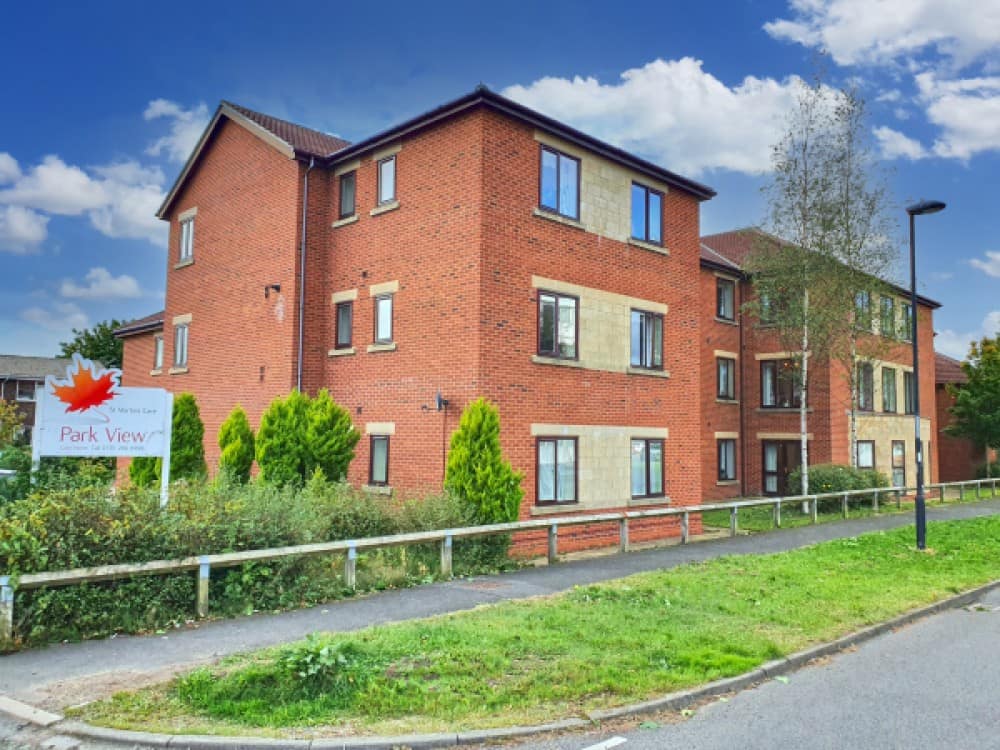
It is a development of self-contained flats or bungalows where your parent lives independently but is not alone. Their own front door, their own key, their own kitchen — coming and going as they please.
What is different from an ordinary home
- a scheme manager during the day (the old "warden"), on some schemes visiting rather than resident
- a 24-hour emergency alarm in every room, linked to a monitoring centre
- communal lounge, garden and laundry, with organised activities — often the real reason people come back to life here
- grounds and building maintenance included in the service charge
- in extra care schemes only: a care team on site around the clock, meals in a restaurant, and personal care arranged by the hour
The legal distinction that matters: sheltered housing is housing, not care. There is no registered nurse, no medication rounds, no CQC registration for the housing itself. Extra care sits in between — the housing is still housing, but the care provider on site is CQC-registered, and that is worth checking separately.
The cost difference, which is the part that surprises
| Sheltered housing | Extra care housing | Care home | |
|---|---|---|---|
| Who it suits | independent | needs some daily help | needs 24-hour care |
| Typical cost | £400–900/month | £900–1,800/month | £3,500–5,000/month |
| Care included | none | by the hour, on site | full, 24 hours |
| Independence | high: own front door | high | low |
| Help with costs | Housing Benefit, Pension Credit, Attendance Allowance | as left, plus care funding | means-tested; self-funders pay all |
The numbers vary hugely by region, but the ratio holds almost everywhere: sheltered housing costs a fraction of a care home.
And here is what many families do not realise. Because it is housing, your parent is still living in their own home in the eyes of the system. That means Housing Benefit can cover much of the rent for a tenant on a low income, Pension Credit still applies, Attendance Allowance is unaffected, and — crucially — they remain entitled to a care needs assessment from the local council, which can fund carers coming in. None of that survives a move into a care home, where the means test bites at a far lower threshold.
How to tell whether it is this and not a care home
Five questions — the same ones a social worker asks
- Can they wash and dress themselves? If yes, a care home is almost certainly far more than they need.
- Do they take their own medication, or is it enough that someone prepares it? Prompting is compatible with sheltered housing. Administering is not.
- Do they still walk, even with a stick or frame? Then they need independence, not supervision.
- Is the real problem loneliness, an unsuitable house, or fear of falling? Those are the three reasons this option works better than anything else.
- Is there dementia? Here the answer changes: early on, a scheme may be enough, but once there is disorientation or a risk of walking out and getting lost, it needs a registered setting with staff.
Four yeses and a no to the last one: you are looking at the wrong kind of place.
Five checks before signing
1. Tenure — this is the big one. Is it rented from a housing association or council, leasehold, or shared ownership? A leasehold retirement flat carries service charges, ground rent, and often an event fee (a percentage of the sale price payable when the flat is sold or your parent dies). Ask for that figure in writing before anything else — families are regularly caught out by it years later.
2. What happens if they get worse. The most important question, and the one almost nobody asks: *"If my mother could not get out of bed on her own in a year's time, what happens?"* Honest answers are two: "she would have to move", or "we have extra care on the same site and she can transfer". The second is worth a great deal — it avoids a second move at the worst possible moment.
3. Is the manager resident or visiting? Many schemes quietly moved from a live-in warden to a manager who visits twice a week. That is a completely different product. Ask directly, and ask what the alarm actually connects to.
4. What the service charge covers — and how it has risen. Ask for the last three years of accounts. Service charges on retirement schemes have risen steeply; a flat that looks affordable today may not be in five years.
5. The care, separately. In extra care, the housing and the care are two contracts with two providers. Look up the care provider on the CQC website by name — its rating is public and it is not the same thing as the scheme's reputation.
The advantage that does not show up in the numbers
There is a reason to push down this road while your parent is still independent, and it has nothing to do with money.
In a care home, an independent person becomes more dependent: meals are brought, clothes are laid out, everything is organised by someone else. It is comfortable, and it is precisely what accelerates decline. In sheltered housing they carry on cooking something, walking to the shop, deciding when supper happens. These sound like details: they are the difference between living somewhere and being looked after.
And there is a practical effect on the family: the conversation is far easier. *"You'd move to a smaller flat where there's someone around if you need them"* is something a parent can hear. *"We're putting you in a home"* almost never is.
When it stops being enough
Be honest about the signs
- daily help needed with washing or dressing
- repeated falls
- medication that has to be given, not just prompted
- night-time confusion, or a risk of leaving and getting lost
- daily nursing care — wounds, catheter, pressure sores
At that point a care home becomes the right answer again, and resisting helps nobody. But if that moment arrives in two or three years instead of now, that is two or three years of a freer life — and tens of thousands of pounds not spent.
What to take away
- A care home is built for 24-hour care needs: for an independent person it costs several times as much and removes freedom.
- Sheltered housing keeps your parent legally in their own home — Housing Benefit, Pension Credit, Attendance Allowance and council care funding all still apply.
- It is housing, not care: no nurses, no medication rounds. Extra care is the step in between.
- Before signing: tenure and event fees, what happens if they decline, resident or visiting manager, service charge history, the care provider's CQC rating.
- Ask the council's housing options team about "housing for older people", not about "a care home place".
Not sure which type you actually need? That is exactly what we do: with Curalune Care Help (£69) we read your situation and tell you whether it is sheltered housing, extra care or a care home — then send you 3 to 5 suitable options in your area within 24 working hours, with current availability and fees checked. Getting the category right is the single decision that saves the most money.