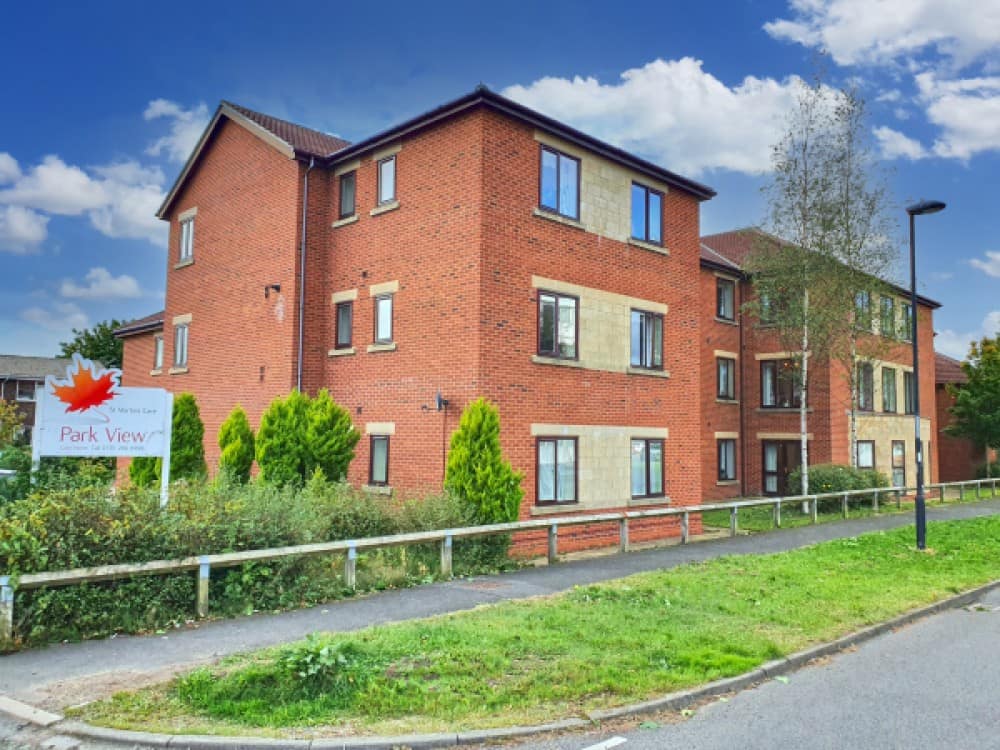
Buildings that were never designed for this
Most British care homes are converted houses, post-war blocks or purpose-built units designed for a climate that no longer reliably turns up. Large windows, no shading, no air conditioning, and the warmest rooms on the top floor — which is often where the least mobile residents are, because that is where the quiet rooms are.
When a heat alert lands, none of that changes. What changes is whether somebody has a plan for it. This article gives you six questions to ask now, because once the alert is live it is too late to organise anything.
The alerts are public, and they are regional
England has a heat-health alerting system run jointly by the UK Health Security Agency and the Met Office, sitting inside the wider adverse weather and health framework. Alerts are colour-coded — yellow, amber, red — and issued by region, with impact-based wording about what is expected to happen to health services and vulnerable people.
Two things follow. You can check the alert level for the region where the home is, which is not necessarily where you are. And the home is expected to have a plan that responds to those levels.
So do not ask "do you have a heat plan?" — the answer will be yes. Ask: at which alert level does your plan activate, what actually changes compared with a normal day, and who activates it at the weekend? A plan nobody can name the trigger for is a document, not a plan.
The cool room, and the number worth asking about
Guidance in this area has long pointed to keeping at least one indoor space cool enough for vulnerable people — the figure usually cited is at or below 26°C — and to moving residents there during the hottest part of the day.
That gives you a concrete, checkable question. Not "is there air conditioning" but: which room is the cool room, what does the thermometer in it actually read at three in the afternoon, how many residents can be in it at once, and how many hours a day is my mother in it? A lounge that seats twenty in a home of eighty residents is not an answer — it is a rota problem somebody needs to have solved in writing.
Ask about her own room too. If it faces south with no shading and reads 30°C at night, sleep goes, and for a resident with dementia poor sleep is the first domino.
The medicines nobody reviews
This is the most neglected part and the easiest to fix. Several drug classes that are extremely common in care homes raise the risk during hot weather: diuretics, which worsen dehydration; antipsychotics and several other psychotropics, which interfere with temperature regulation; anticholinergics, which reduce sweating; and some antihypertensives, which combined with heat-driven vasodilation drop blood pressure and lead to falls.
This does not mean stopping them. Stopping them is dangerous and it is not a family decision. It means the prescriber should review them when an alert is issued, adjusting doses and timing. Ask directly: has her medication been reviewed in light of the heat, and by whom? In most cases the honest answer will be no, and the question alone is usually enough to make it happen. The route is the GP practice that covers the home, or the pharmacist who does her medication reviews.
What should change on an alert day
- Supervised hydration — not a jug left on the table of someone who cannot lift it, but rounds with a record of what was actually drunk. For residents with swallowing problems, thickened fluids available in quantity.
- Temperature checks more often for at-risk residents, not only on request.
- Weight monitored — a rapid loss over a few summer days is dehydration until proven otherwise.
- Activities moved out of the middle of the day rather than cancelled; immobility has its own cost.
- Clothing and bedding changed — it happens that the winter duvet stays on because it is the one in the cupboard.
- A lower threshold for calling the GP or 111, with written criteria: new confusion, unusual drowsiness, passing little urine, dry skin.
Heatstroke does not look like "feeling hot"
In an older person it looks like sudden confusion, drowsiness, weakness, sometimes hot dry skin with no sweating. If your mother is like that she is not "a bit wilted by the weather" — it is an emergency and it is 999.
Six questions to ask
- At which alert level does your plan activate, and who activates it at a weekend?
- Which room is the cool room, what temperature does it hold, and how long is she in it each day?
- What does her own room read on a hot afternoon and overnight?
- How do you record what she has actually drunk, and who checks it?
- Has her medication been reviewed for the heat, and by whom?
- What are staffing levels in August compared with March?
If you get nowhere
Put it in writing to the manager: one question, one date. If the concern is clinical — medication not reviewed, nobody monitoring a frail resident — go to the GP practice that covers the home, then the NHS complaints route through the integrated care board, with PALS to help. If the concern is that the building cannot keep residents safe in heat, that is squarely a matter for the Care Quality Commission, which looks at both safe care and suitable premises. If a resident has come to serious harm, the local authority safeguarding team is the right call and you do not need permission to make it.
Where to start
If your mother is already in a home, send those six questions in writing today, not at the end of August. A written request in July gets answers; the same request after an incident gets explanations.
If you are still choosing, you have an unusual advantage right now: you are visiting in the month when a building's limits are visible. Walk into the lounge at three in the afternoon and see for yourself.
If you would rather not do it alone, we can. For £69 we take down your mother's situation, look for the homes in your area that answer these questions properly, and report back what they told us, with names and dates. Start here
This article is for information and does not replace medical advice on your own situation. No medication should be stopped or changed without the prescriber. Alerting arrangements and guidance differ across England, Scotland, Wales and Northern Ireland and are updated between seasons: check the current position with the home and the GP practice. Curalune does not allocate beds and does not guarantee availability.